In the summer of 1968, a bus carrying Upward Bound students and staff from Paine College pulled into Magnolia Springs State Park for a picnic. It was the day of the Miss Magnolia Springs Contest. When the Black students stepped onto the dance floor, a park staff member locked the jukebox and told the group to have its picnic at Lincoln State Park, down the road.
At the time, Lincoln had a pool and a bathhouse. Magnolia Springs had far more. Nearly sixty years later, the Lincoln property at 546 Winthrope Avenue has a new owner and a plan to make it a place where people stay the night. The state never built it for that.
What The November News Says
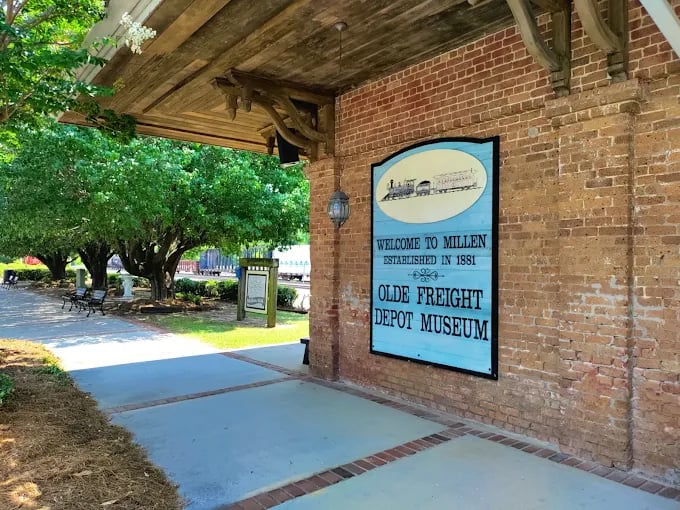
On November 3, The Millen News reported that Faheem Ali, owner of the alkaline water bottling company Keen Water, has purchased the former Lincoln State Park property and that it will become a "glamping resort." A day later, Woodall's Campground Magazine picked up the story from the Millen paper. Its version adds that Ali first planned to build a water bottling plant on the property before deciding to change direction.
That change of direction matters for anyone who lives near Winthrope Avenue. A bottling plant would have made the old park a workplace. A glamping resort makes it a destination again. If it gets built, it will be a different kind of destination from the one Georgia created there in the 1950s.
A Park Created As The Other Option
The Georgia Parks Department created Lincoln State Park in 1955 on land deeded by D.L. Few and the Community Center of Millen. That account comes from a 2022 University of Georgia historic preservation thesis, Segregated Spaces. The thesis places the park five miles from Magnolia Springs State Park, which at the time was open to white visitors only.
The park covered 52 acres inside Millen's city limits, so it was within walking distance for many of the town's African American residents. It was also limited to day use. Its early facilities were a trading post, a café, a large picnic area, a swimming area, hiking trails and a playground.
Lincoln was one of several parks the state set aside for Black Georgians. In a history marking the system's 90th anniversary, Georgia State Parks lists George Washington Carver State Park in Acworth, Yam Grandy State Park near Swainsboro, Lincoln State Park near Millen and a section of Georgia Veterans State Park near Cordele. The same history says the equipment, facilities and buildings at those parks were not held to the same standard as the white-only parks.
Plans On Paper, Then A Long Pause
Lincoln's state-run years follow a pattern. Improvements were planned, then stalled, and the facilities stayed small next to the larger park down the road.
| Year | What the record shows |
|---|---|
| 1955 | Park created on 52 acres, day use only |
| 1960 | Plans made for a picnic shelter, tables, and a dressing room with restrooms |
| 1962 | A federal outdoor recreation report says no plans were reported to improve or expand facilities |
| 1968 | Facilities described as a pool and a bathhouse |
| 1969 | Caretaker paid $1,800 a year; pool concession pays the state $360 a year |
| 1971 | $6,000 granted for beautification and playgrounds |
| 1972 | Park described as having a swimming pool, athletic field and a stream for fishing |
| 1975 | Park conveyed to local government |
The 1969 entry shows how the park ran on a small budget. The thesis names Cleophus Plummer as caretaker that year, paid $1,800 annually. His wife oversaw the swimming pool and ran the concession stand, paying the state $360 a year for the right to operate it. That meant one family looked after the grounds and the pool, and the concession sent back to the state about a fifth of what it paid the caretaker.
Two years later came the $6,000 grant for beautification and playgrounds. By 1972 the park was described as having a swimming pool, an athletic field and a stream for fishing. The thesis describes those late-1960s and early-1970s years as a time when Lincoln "gained some momentum." The improvements came late in the park's run as a state park.
How The State Let Go
Georgia's segregated parks were challenged in court during the Civil Rights Era, and community activism exposed how unequal they were. Once the state park system was integrated, the segregated parks were closed, turned over to local recreation departments, or absorbed into other state parks.
Lincoln was turned over to local government. The June 1975 issue of the state's Outdoors in Georgia magazine, archived by the Digital Library of Georgia, reported that the General Assembly had conveyed two state parks to local governments. Chehaw State Park went to Dougherty County, and Lincoln State Park went to Jenkins County, with each park "now to be operated by the local governments."
Through all twenty years as a state park, the record describes Lincoln as a place for an afternoon. People came to swim, picnic, fish, walk the trails, play ball, and then go home.
What Overnight Stays Would Change
That history is why the glamping plan stands out. A resort with lodging on the grounds would make the old park a place where people sleep, on land the state opened for day use only. The 1960 plans for a picnic shelter and dressing rooms barely moved, and the biggest improvement on record is a $6,000 grant. A private owner planning overnight guests would be a different scale of investment from anything in the state-era record.
Magnolia Springs still sets the comparison. In 1968 it was the park with the dance floor and the full set of amenities, and Lincoln was where visitors got sent. A resort at Lincoln would make the two sites five miles apart both places where people visit Jenkins County on purpose. For people living around Winthrope Avenue, a resort would most likely bring more visitor traffic, more out-of-town cars, and new attention to a stretch of Millen history that most visitors to Magnolia Springs have never heard.
The full Millen News story is available to subscribers, and the paper is the best place to follow the project as it develops.
Down The Road At Magnolia Springs This Month
Thanksgiving week puts the other half of this story on the calendar. Magnolia Springs State Park has a run of programs at the Camp Lawton History Center over the holiday weekends, all listed on the Georgia State Parks events calendar. Parking is extra on every program.
- Friday, November 20: "Camp Lawton: A Civil War Prison," 10 to 11 a.m., $5, children 3 and under free, with History Center admission included. Homeschool Friday Corn Husk Dolls, 1 to 2 p.m., $4.
- Saturday, November 21: "Camp Lawton Earthworks," 10 to 11 a.m., $5. Corn Husk Dolls, 11:30 a.m. to noon, $4, advance registration required. Fall Archery at the archery range, 2 to 3 p.m., $10, ages 8 and up, advance registration required.
- Sunday, November 22: "Camp Lawton: A Civil War Prison," 10 to 11 a.m., with a hike to the spring from the History Center, $5. Fall Archery, 2 to 3 p.m., $10.
- Saturday, November 28: The same lineup as the 21st, with Earthworks at 10 a.m., Corn Husk Dolls at 11:30 a.m. and Fall Archery at 2 p.m.
- Sunday, November 29: "Camp Lawton: A Civil War Prison" at 10 a.m. and Fall Archery at 2 p.m.
The park's calendar has nothing listed after November 29 until January 1, 2027, so the Sunday after Thanksgiving is the last scheduled program for the year. If family is in town for the holiday, the Saturday Earthworks walk and the drive back toward Winthrope Avenue cover both parks in this story in one morning.
If you swam in the Lincoln pool, played ball on that athletic field, or remember what the grounds were used for after 1975, we'd love to hear your story. Our office is on Cotton Avenue, and Millen's history is part of what we care about at Southland Realty & Properties. Stop by or give us a call, and we'll keep you posted on what happens with Lincoln Park.